I started this blog in July 2009 with great intentions when I wrote the following:
I am endeavoring to put flesh and bones onto the names of my family tree and hope to post some interesting stories about ancestors and their descendants.
There are over 10,000 names in my database, with 7,600 on the Butchart side alone. I have been concentrating on the Davies and Crockett side recently and thank my Dad's sister, Ev, for sharing her memories with me.
This is my first post since 2012. It was about that time that we discovered my husband's birth family and I have been totally distracted by that since then. It's time to get back to my family stories.
Saturday, December 16, 2017

Thursday, June 14, 2012
Amos from Tring
In spite of being over ninety years old, Amos Crockett's granddaughter still has vivid recollections of her grandfather. She remembers him as being crippled, stooped over, and needing two canes to walk across the room. She thought of him as a very old man, yet he was only sixty-eight when he died.

Amos was born at Tring, Hertfordshire, England on May 19, 1865. He was born to James Crockett, a jobbing labourer, and Annie Fitkin, a straw plaiter. He was born at home on Harrow Yard on Akeman Street. At the time of his birth, his siblings James 7, Amelia 5, Rebekah 3, and David 1, were at home.
Akeman Street runs north/south through Tring and is one of the original Roman roads that run through Britain. Tring is about 35 miles north of London.
The Crockett family were among the illiterate working class in Victorian times. The men had to find jobs labouring on the farms or in the textile mills. Women often had more income than the men by plaiting straw for the hat industry. Straw plaiting was done at home and the women took their finished work to market on Wednesday mornings to sell to the buyers from the hat factories nearby. The picture below depicts women working at home plaiting straw while watching their young children. Children as young as seven were put to work, adding to the family income.

Saturday, March 10, 2012
Amy Jones, a "Fearless Female".
March is Women's History Month and last year I wrote a number of articles about Fearless Females. Auntie Amy is one I missed.
Amy Jones was about the same age as the twins, Thomas and Alice Crockett and they undoubtedly knew each other as children. In 1901 the Jones family lived on Dudley Road and the Crockett family lived on High Street in the city of Stourbridge. Amy was a twenty-year-old dressmaker living with her family when her fiance, Tom Crockett emigrated to Canada in April 1912. It would be another three years before Amy embarked from Liverpool on the White Star liner, Arabic on August 18, 1915. She was twenty-four years old, but the newspaper articles still referred to her as a girl.
The Arabic was one of the first passenger ships to be sunk by German submarines in World War I; it only took twenty minutes for the ship to go down with the loss of six passengers and twenty-six crew members. The following article appeared in the September 14 issue of the Edmonton Daily Bulletin where Amy gave an account of her experience.
Although there were no Edmontonians on the White Star liner Arabic, when she was sunk off the south coast of Ireland on the morning of the 19th of August, there was one young lady passenger who was on her way here. She is Miss Amy Jones, of Stourbridge, England, fiance of Mr. Thomas Crockett, transfer clerk at the Hudson's Bay stores. She was among those that were saved, and in a letter she gives a graphic account of her terrible experiences.
"We set sail in the best of spirits; the passengers were so friendly and no one seemed to give a thought to the dangers which might be lurking ahead. I made friends with a young Irish girl in the same cabin as myself and we quite enjoyed our first night aboard.
Next morning as soon as breakfast was over--it would be about nine o'clock--we went up on deck and were chatting with a few other passengers when out attention was drawn to another ship ahead, which appeared to be sinking. We little dreamed it had been torpedoed and I did not in the least feel afraid.
We had been watching the Dunsley for some time when suddenly someone near us cried "Look out; submarine" and the vessel was struck in a second. The explosion was terrible and we were thrown from one side of the vessel to the other, my friend and I being parted in the excitement. I simply rolled in the water on the deck and the fumes from the torpedo seemed to take my senses away. I was left lying on the deck; they evidently thought I was done for. When I opened my eyes I tried to get to my feet but could hardly manage it as I was in so much water. I couldn't see a woman anywhere, only a few men. Of course those below, poor souls, had been blown to pieces. A lifebelt lay near me, into which I tried to get, but the tapes were broken off, so that I couldn't fasten it to me. Just then I spotted a boat full of men at the side and I rolled off into the middle of them. It was a case of help yourself and had I not done so I would not be here now.
We had just got away from the Arabic when she disappeared and I felt so sorry, for it was a lovely boat. After being in the lifeboat long enough to get stiff with cold, as I was wet through, we were picked up by a destroyer, and I cried for joy. I tried not to break down, but I really couldn't help it for I felt half dead. We must have presented a strange sight, for most were only half dressed. I had no coat or hat and I even lost my shoes. I managed to have some of my money, for I had it fastened round my neck, and although the notes were wet they dried out alright and I was able to purchase new clothes in Queenstown when we were landed. We were taken to the Queen's Hotel, Queenstown, and here I met my Irish friend again. We were delighted to see each other again, for each thought the other had been lost. It appears she got away on one of the first boats.
Everything except what I stood up in was lost--presents, jewelry, and all other belongings. I retained my watch and one ring, but the watch is useless for it stopped when the boat was struck and had refused to work since. Still, I suppose I should not think of any loss I have had, but thank God for being saved from such an awful death.
Some poor souls suffered far worse than I did. It made my heart ache to see the poor children who had lost their mothers and I was filled with hatred of those inhuman wretches who could make innocent people suffer so.
We left Queenstown at 4 p.m. Friday and traveled by train to Dublin. From there we sailed by midnight mail boat to Hollyhead and then by train to Liverpool. I reached home safely at 9 p.m. Saturday evening little worse for the awful experience which I had undergone"
Undaunted, Amy set sail again to be with her Tom. She sailed aboard the Corsican less than two months after the disaster with the Arabic and arrived in Quebec on October 25, 1915. The following appeared in the Morning Bulletin on Friday, December 17, 1915 in the column entitled CUPID'S COURT:
Mrs. Crockett is the plucky English girl who was among the rescued when the Arabic was torpedoed by a German submarine. A full account of her experiences was published in the Bulletin shortly after that tragic even took place. Although having lost all she had on her first short trip, she was undaunted, and as soon as she recovered from the ordeal she had undergone, and re-equipped herself, she came to meet her fiance--now her husband. The happy couple were recipients of numerous lovely presents, including one from a number of Mr. Crockett's fellow employees at the Hudson's Bay store.
Amy Jones was about the same age as the twins, Thomas and Alice Crockett and they undoubtedly knew each other as children. In 1901 the Jones family lived on Dudley Road and the Crockett family lived on High Street in the city of Stourbridge. Amy was a twenty-year-old dressmaker living with her family when her fiance, Tom Crockett emigrated to Canada in April 1912. It would be another three years before Amy embarked from Liverpool on the White Star liner, Arabic on August 18, 1915. She was twenty-four years old, but the newspaper articles still referred to her as a girl.
The Arabic was one of the first passenger ships to be sunk by German submarines in World War I; it only took twenty minutes for the ship to go down with the loss of six passengers and twenty-six crew members. The following article appeared in the September 14 issue of the Edmonton Daily Bulletin where Amy gave an account of her experience.
Letter From Young English Girl on Way to Edmonton on the Arabic
Although there were no Edmontonians on the White Star liner Arabic, when she was sunk off the south coast of Ireland on the morning of the 19th of August, there was one young lady passenger who was on her way here. She is Miss Amy Jones, of Stourbridge, England, fiance of Mr. Thomas Crockett, transfer clerk at the Hudson's Bay stores. She was among those that were saved, and in a letter she gives a graphic account of her terrible experiences.
"We set sail in the best of spirits; the passengers were so friendly and no one seemed to give a thought to the dangers which might be lurking ahead. I made friends with a young Irish girl in the same cabin as myself and we quite enjoyed our first night aboard.
Next morning as soon as breakfast was over--it would be about nine o'clock--we went up on deck and were chatting with a few other passengers when out attention was drawn to another ship ahead, which appeared to be sinking. We little dreamed it had been torpedoed and I did not in the least feel afraid.
We had been watching the Dunsley for some time when suddenly someone near us cried "Look out; submarine" and the vessel was struck in a second. The explosion was terrible and we were thrown from one side of the vessel to the other, my friend and I being parted in the excitement. I simply rolled in the water on the deck and the fumes from the torpedo seemed to take my senses away. I was left lying on the deck; they evidently thought I was done for. When I opened my eyes I tried to get to my feet but could hardly manage it as I was in so much water. I couldn't see a woman anywhere, only a few men. Of course those below, poor souls, had been blown to pieces. A lifebelt lay near me, into which I tried to get, but the tapes were broken off, so that I couldn't fasten it to me. Just then I spotted a boat full of men at the side and I rolled off into the middle of them. It was a case of help yourself and had I not done so I would not be here now.
We had just got away from the Arabic when she disappeared and I felt so sorry, for it was a lovely boat. After being in the lifeboat long enough to get stiff with cold, as I was wet through, we were picked up by a destroyer, and I cried for joy. I tried not to break down, but I really couldn't help it for I felt half dead. We must have presented a strange sight, for most were only half dressed. I had no coat or hat and I even lost my shoes. I managed to have some of my money, for I had it fastened round my neck, and although the notes were wet they dried out alright and I was able to purchase new clothes in Queenstown when we were landed. We were taken to the Queen's Hotel, Queenstown, and here I met my Irish friend again. We were delighted to see each other again, for each thought the other had been lost. It appears she got away on one of the first boats.
Everything except what I stood up in was lost--presents, jewelry, and all other belongings. I retained my watch and one ring, but the watch is useless for it stopped when the boat was struck and had refused to work since. Still, I suppose I should not think of any loss I have had, but thank God for being saved from such an awful death.
Some poor souls suffered far worse than I did. It made my heart ache to see the poor children who had lost their mothers and I was filled with hatred of those inhuman wretches who could make innocent people suffer so.
We left Queenstown at 4 p.m. Friday and traveled by train to Dublin. From there we sailed by midnight mail boat to Hollyhead and then by train to Liverpool. I reached home safely at 9 p.m. Saturday evening little worse for the awful experience which I had undergone"
Undaunted, Amy set sail again to be with her Tom. She sailed aboard the Corsican less than two months after the disaster with the Arabic and arrived in Quebec on October 25, 1915. The following appeared in the Morning Bulletin on Friday, December 17, 1915 in the column entitled CUPID'S COURT:
CROCKETT - JONES
A happy event was solemnized yesterday afternoon at St. Faith's church when Miss Amy Jones of Stourbridge, England and Mr. Thomas A Crockett of Edmonton, were united in matrimony by the Rev. Mr. Whittaker. The bride looked charming in a white satin dress with veil, and wreath of orange blossoms, she was given away by Mr. E. Ball, and her bridesmaid was Miss A. James. The groom was supported by his cousin, Pte. C. Arnold, of the 51st Battalion, as best man. After the ceremony, luncheon was served at the home of Mr. and Mrs. B. Arnold, 11824 91st Street. Mr. Crockett has a large circle of young friends and about fifty guests gathered at the house after the ceremony and showered their congratulations upon the happy pair.Mrs. Crockett is the plucky English girl who was among the rescued when the Arabic was torpedoed by a German submarine. A full account of her experiences was published in the Bulletin shortly after that tragic even took place. Although having lost all she had on her first short trip, she was undaunted, and as soon as she recovered from the ordeal she had undergone, and re-equipped herself, she came to meet her fiance--now her husband. The happy couple were recipients of numerous lovely presents, including one from a number of Mr. Crockett's fellow employees at the Hudson's Bay store.
Thursday, March 1, 2012
John Bellamy, mariner
The Bellamy side of the family has been my greatest challenge in the family tree. My grandfather, John Samuel Bellamy aka John Stanhope Bellamy was an enigma and parts of his life are still unknown to me. See John Bellamy - A research challenge. I still wonder about the circumstances of my great-grandparents, John Henry Bellamy and Elizabeth Rason's emigration to Canada; but my brick wall has been John Henry Bellamy's father, John Bellamy.
John Bellamy married Mary Frances Parker in Boston, Lincolnshire 25 December 1951. On the marriage entry John was listed as a mariner of full age, son of John Bellamy a labourer. The marriage took place after the 1851 census and Mary Frances Bellamy was listed as a widow with three children aged 8, 5, and John Henry Bellamy aged 3. John Henry Bellamy was born in Boston 31 March 1858, his father was John Bellamy, a mariner in the coasting trade. The mother, Mary Frances Bellamy, formerly Parker, registered the birth 7 May 1858. Mary Frances could write, John Bellamy could not and signed his marriage with an X. Those were the only facts I could go on until last week when Find My Past finally offered the Merchant Navy records.
I believe my g.g.grandfather is:
John Bellamy born at Hareby, Lincolnshire 11 December 1824. Ticket number 131076 was issued at Boston, Lincolnshire 10 January 1845, his capacity or rank was "boy". He was 5' 5" tall with fair complexion, light hair, and blue eyes. He first went to sea as boy in 1843 (aged 19). He could not write and when not at sea, he was resident of Boston.
Knowing that, I looked for John Bellamy from Hareby and found the following at Family Search:
Unfortunately, the 1841 census for England does not provide relationships, marital status, or place of birth and the ages of people over 15 are rounded down to the nearest 5. I found the following family living on George Street in Boston, Lincolnshire:
Family Search is a free genealogy site with a lot of information and another free site specifically for Lincolnshire is Lincs to the Past. When I typed Bellamy Hareby into the search box, I got the following result:
Now I have lots to work on, but at least I have a starting place with more branches to my ever-increasing family tree.
John Bellamy married Mary Frances Parker in Boston, Lincolnshire 25 December 1951. On the marriage entry John was listed as a mariner of full age, son of John Bellamy a labourer. The marriage took place after the 1851 census and Mary Frances Bellamy was listed as a widow with three children aged 8, 5, and John Henry Bellamy aged 3. John Henry Bellamy was born in Boston 31 March 1858, his father was John Bellamy, a mariner in the coasting trade. The mother, Mary Frances Bellamy, formerly Parker, registered the birth 7 May 1858. Mary Frances could write, John Bellamy could not and signed his marriage with an X. Those were the only facts I could go on until last week when Find My Past finally offered the Merchant Navy records.
I believe my g.g.grandfather is:
John Bellamy born at Hareby, Lincolnshire 11 December 1824. Ticket number 131076 was issued at Boston, Lincolnshire 10 January 1845, his capacity or rank was "boy". He was 5' 5" tall with fair complexion, light hair, and blue eyes. He first went to sea as boy in 1843 (aged 19). He could not write and when not at sea, he was resident of Boston.
Knowing that, I looked for John Bellamy from Hareby and found the following at Family Search:
name: John BellamyTwo other children were listed on the same batch born to John and Sarah: William christened 1 Oct 1820 and Mary christened 15 Sep 1822.
gender: Male
baptism/christening date: 12 Dec 1824
baptism/christening place: HAREBY,LINCOLN,ENGLAND
father's name: John Bellamy
mother's name: Sarah
indexing project (batch) number: C02893-1
system origin: England-ODM
source film number: 507824
Unfortunately, the 1841 census for England does not provide relationships, marital status, or place of birth and the ages of people over 15 are rounded down to the nearest 5. I found the following family living on George Street in Boston, Lincolnshire:
Name AgeIt appears that the father, John Bellamy has died before the census was taken in March 1841 and the son, John, had left the family to go to work by this time. There are a number of John Bellamys working as labourers or servants aged 15 in and around Lincolnshire in 1841 but I cannot prove any of them are my John Bellamy.
Sarah Bellamy 40
Mary Bellamy 15
Thomas Bellamy 14
Samuel Bellamy 12
George Bellamy 10
Sarah Bellamy 8
Elizabeth Bellamy 6
Family Search is a free genealogy site with a lot of information and another free site specifically for Lincolnshire is Lincs to the Past. When I typed Bellamy Hareby into the search box, I got the following result:
Removal OrderRemoval orders and Settlement Orders were sometimes required to move from one Poor Laws Union to another. From this little tidbit I found that the father, John Bellamy, was a labourer and that the lived in Bolingbroke before November 1819. I went back to Family Search and found Susannah who was christened 15 January 1818 in Bolingbroke. She was the only child of John and Sarah listed. I then searched for a marriage in Bolingbroke and there were none for John and Sarah.
Reference Name BOLINGBROKE PAR CO/6/7/23
John Bellamy, labourer, Sarah his wife and their child Susanna aged about 1½, from Bolingbroke to Hareby.
Date: 15 November1819
Repository: Lincolnshire Archives [057]
Now I have lots to work on, but at least I have a starting place with more branches to my ever-increasing family tree.
Saturday, March 12, 2011
Fearless Females: Female ancestor who died young
March 11 — Did you have any female ancestors who died young or from tragic or unexpected circumstances? Describe and how did this affect the family.
Mary Creak Smith, my great-great-grandmother, was born in Sutterton, Lincolnshire, England about 1830. She was twenty-five when she married Samuel Rason in Boston, Lincolnshire in 1855. Samuel was a mariner with the merchant marine when he married and when my great-grandmother, Elizabeth Rason was born in 1856.
The family grew to six children by the end of 1871 but by this time Samuel was master of his own fishing boat called the Magic. Circumstances changed for the Rason family and they moved from Boston, north to Grimsby. Mary was forty-four years old when she gave birth to her seventh child, Robert in 1874. This child died as an infant. She once again fell pregnant and an unnamed male child was born and died just before his mother.
Although Mary's death registration states she was forty-two years old when she died, she was actually forty-six, too old to bear a child, but much too young to die. She died at home on Freeman Street in Grimsby on March 17, 1876 and she was listed as the wife of Samuel Rason, greengrocer. The cause of death was "puerperal Peritonitis", also known as childbed fever. Samuel was not the informant for the death registration, it was a neighbour, Hannah Lee.
So there was Samuel, no longer a master of his own boat, just a greengrocer or fruiterer left with five living children. What did he do? He took up with Mary's younger sister, Sarah Ann Smith. Sam and Sarah Ann's first child was born in Grimsby on August 4, 1897, less than seventeen months after Mary's death. I have no record of a marriage, perhaps because marriage to a wife's sister was forbidden by law in England at that time. The family moved to Canada before the turn of the century and I haven't found a marriage after the emigration either. Sarah Ann was known as Grandma Rason to all the descendants of Samuel.
Mary Creak Smith, my great-great-grandmother, was born in Sutterton, Lincolnshire, England about 1830. She was twenty-five when she married Samuel Rason in Boston, Lincolnshire in 1855. Samuel was a mariner with the merchant marine when he married and when my great-grandmother, Elizabeth Rason was born in 1856.
The family grew to six children by the end of 1871 but by this time Samuel was master of his own fishing boat called the Magic. Circumstances changed for the Rason family and they moved from Boston, north to Grimsby. Mary was forty-four years old when she gave birth to her seventh child, Robert in 1874. This child died as an infant. She once again fell pregnant and an unnamed male child was born and died just before his mother.
Although Mary's death registration states she was forty-two years old when she died, she was actually forty-six, too old to bear a child, but much too young to die. She died at home on Freeman Street in Grimsby on March 17, 1876 and she was listed as the wife of Samuel Rason, greengrocer. The cause of death was "puerperal Peritonitis", also known as childbed fever. Samuel was not the informant for the death registration, it was a neighbour, Hannah Lee.
So there was Samuel, no longer a master of his own boat, just a greengrocer or fruiterer left with five living children. What did he do? He took up with Mary's younger sister, Sarah Ann Smith. Sam and Sarah Ann's first child was born in Grimsby on August 4, 1897, less than seventeen months after Mary's death. I have no record of a marriage, perhaps because marriage to a wife's sister was forbidden by law in England at that time. The family moved to Canada before the turn of the century and I haven't found a marriage after the emigration either. Sarah Ann was known as Grandma Rason to all the descendants of Samuel.
Thursday, March 10, 2011
Fearless Females: Religion
March 10 — What role did religion play in your family? How did your female ancestors practice their faith? If they did not, why didn’t they? Did you have any female ancestors who served their churches in some capacity?
Although both the Crockett and Davies had a background with the Salvation Army, my grandparents belonged to the United Church of Canada. They attended St. Aiden's United Church from the time they arrived in Victoria until they died and my Dad's sister and family still go to that church.
My maternal grandparents also belonged to the United Church and attended Norwood United Church in Edmonton until 1926 when they buried their son, Jimmy. After the death of his little boy, Grandpa Bellamy went off religion and would not enter a church. For this reason he did not attend my parents' wedding. Granny attended church regularly when she was with the Hopkins family in Oliver in her later years.
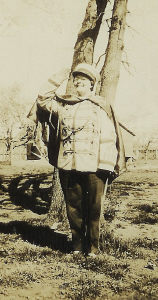 |
| Lucy (Crockett) Davies in Salvation Army Uniform |
My maternal grandparents also belonged to the United Church and attended Norwood United Church in Edmonton until 1926 when they buried their son, Jimmy. After the death of his little boy, Grandpa Bellamy went off religion and would not enter a church. For this reason he did not attend my parents' wedding. Granny attended church regularly when she was with the Hopkins family in Oliver in her later years.
Regardless of the fact that Mom and Dad met at a church outing and a few years later married at Norwood United, in Edmonton, God had no presence in our home. Sundays were reserved for family activities and usually started with waffles or pancakes cooked by Dad while Mom enjoyed the chance to sleep in.
This routine was interrupted for about one year when I was six years old. I do not remember who was the donor, but in a bundle of used children’s duds was a perfectly good suit which fit my brother, Gordon.
Now that Gord had a suit, it was decided that he should go to church and that I should go along too. The closest United Church to our home was about three miles away but our neighbours regularly attended St. Michael of all Angels, an Anglican church on West Saanich Road. We attended church with the Macdonald family for a year or so until Gordon outgrew the suit and we were glad to return to our regular Sunday mornings with the family.
Wednesday, March 9, 2011
Fearless Females: A family document
March 9 — Take a family document (baptismal certificate, passenger list, naturalization petition, etc.) and write a brief narrative using the information.
I have chosen a page from the manifest for the ship SS Lake Manitoba on its sailing from Liverpool to Quebec from 31 August to 12 September, 1911. My grandmother, Lucy Millicent Crockett, her sister, Alice, and her sister-in-law, Jessie are listed on this ship's list.

The following picture is of the Crockett family in England before they left for North America. My grandmother, Lucy Millicent Crockett is shown seated on the right.
 |
| Back: James, Richard (Bert), Jessie (wife of Bert), Thomas, Alice, George Front: Ada, Amos (holding grandson George) Alice, Lucy |
The father of the family, Amos, was the first to leave, sailing aboard the "Merion" from Liverpool to Philadelphia in February 1911. He was accompanied by his brother, George Crockett, who returned to England two months later. It appears that Amos made his way to Alberta and set up a sawmill on the shores of Lake George near Busby, Alberta.
Bert, the oldest son, was the next of the Crockett family to leave, sailing from Liverpool to Quebec aboard the Laurentic, arriving July 15, 1911. He was sponsored by the Salvation Army and took the CPR train directly to Edmonton.
The manifest shown at the top of this page shows the next group to cross the Atlantic: Bert's wife, Jessie, and her two sisters-in-law, Alice and Lucy. They listed their destination as Edmonton and Jessie was joining her husband.
Bert and Jessie's little boy, George Albert, came with his grandmother, Alice, and his aunt, Ada in October 1911 aboard the Royal George which sailed from Avonmouth. All previous sailings were from Liverpool, in the northern part of England but Alice, Ada, and young George traveled south to catch their ship in Avonmouth. They were listed with a Salvation Army party and Alice was listed as a wife - lumberyard 9 months. Does that mean Amos arrived 9 months previous?
At the end of 1911 there were still three Crockett brothers in England as well as Alice's sister and family, Rebecca and Bagot Arnold. The Arnold and Crockett families had been close since they lived in Wales, and Ada Arnold married her first cousin, George Bunnagar Crockett a few years after the emigrated.
Bagot Arnold and his son, Harry sailed aboard the Canada in February 1912; Bagot claimed to be joining his brother A. Crockett.
George Crockett, brother to Amos, left from Bristol with his family and his nephew, Thomas Crockett, aboard the Royal Edward in April 1912.
James Crockett and his new wife, Emily, boarded the Empress of Ireland in Liverpool on September 20, 1912, just one day after they were married in Staffordshire.
In October 1912 the rest of the Arnold family left Liverpool aboard the Lake Manitoba. George Bunnagar Crockett accompanied the Arnold family, his future in-laws, on this voyage.
At last the family was reunited in Edmonton where many descendants still reside.
Tuesday, March 8, 2011
Fearless Females: Diary or Journal
March 8 — Did one of your female ancestors leave a diary, journal, or collection of letters? Share an entry or excerpt.
Unfortunately, my female ancestors did not write much about themselves, although my Granny Bellamy did write many letters. I have some letters written to her, but none in my Grandmother, Vinetta's hand. I hope that some of Granny's letters surface some day and that I can get a chance to read them. I do have a diary that she received as a Christmas present from her Grandson, Norman Hopkins.
 Granny filled the diary for all of 1968, mostly with entries about receiving and writing letters, hair appointments, daily chores, and going to church. She was living with the Hopkins family in Oliver at the time and in spite of being seventy-eight years old, did many of the household chores because my Aunt Vivian was not well.
I am very thankful that my cousin, Norm Hopkins, had the insight to give Granny a diary, the only thing I could ever think of giving her was writing paper.
Unfortunately, my female ancestors did not write much about themselves, although my Granny Bellamy did write many letters. I have some letters written to her, but none in my Grandmother, Vinetta's hand. I hope that some of Granny's letters surface some day and that I can get a chance to read them. I do have a diary that she received as a Christmas present from her Grandson, Norman Hopkins.

I am very thankful that my cousin, Norm Hopkins, had the insight to give Granny a diary, the only thing I could ever think of giving her was writing paper.
Fearless Females: Recipes
March 7 — Share a favorite recipe from your mother or grandmother’s kitchen. Why is this dish your favorite? If you don’t have one that’s been passed down, describe a favorite holiday or other meal you shared with your family.
 You can tell that this recipe has been pulled from my mother's recipe index many times. I remember asking Mom who Beth was and she thought it was some relative. I do not think she ever met her mother's cousin, Beth.
I recently met Beth's daughter, Andrea, and her sister, Karen, over the internet and we got into a conversation about a bun recipe that has been passed around the family. While going though the recipe file looking for Granny's bun recipe, I came across the card pictured above and the connection with the name Beth hit me. Sure enough, Karen has the same recipe with the exception of the spices added at the bottom.
Beth's Ginger Snaps are my absolutely favourite cookies and my recipe is just as messy looking as Mom's. Running a close second to Beth's Ginger Snaps is an oatmeal-coconut cookie called Mother's Cookies. Who's mother? My maternal grandmother was always referred to as Mother, not Mom, or Mum, perhaps that is where it started, or could it be Granny's mother, Maria Moyer Butchart?

 |
| Elizabeth (Beth) Carr |
Beth's Ginger Snaps are my absolutely favourite cookies and my recipe is just as messy looking as Mom's. Running a close second to Beth's Ginger Snaps is an oatmeal-coconut cookie called Mother's Cookies. Who's mother? My maternal grandmother was always referred to as Mother, not Mom, or Mum, perhaps that is where it started, or could it be Granny's mother, Maria Moyer Butchart?
Sunday, March 6, 2011
Fearless Females: An heirloom
March 6 — Describe an heirloom you may have inherited from a female ancestor (wedding ring or other jewelry, china, clothing, etc.) If you don’t have any, then write about a specific object you remember from your mother or grandmother, or aunt (a scarf, a hat, cooking utensil, furniture, etc.)
I cherish this little portrait that I found in my parents' trunk while clearing out their house after my Dad died. It was with some of my maternal grandmothers possessions including her address books and a diary.
Reflections from the curved glass make it difficult to take a photograph of the portrait, so today I unframed the picture for the first time. I always thought it was a photograph that had been touched up, but I was surprised to find it is an original piece of artwork done in pastels.
I believe it is a portrait of my uncle, James Roy Bellamy, who died as a result of a tragic accident when he was only five years old. Mom was only seven when she lost her little brother but she spoke often of him long after she had lost her memory of more recent events. Jimmy was the youngest of the Bellamy children and he is pictured at the lower left in the group photo. My Mom, Ruth Bellamy is beside him.
Jimmy was struck by a streetcar outside the Bellamy home and it had a devastating effect on the family. My grandfather tried to drown his grief with drink and my grandmother only displayed her feelings when she was playing the piano. Mom remembers the music becoming louder and louder when Grandpa was late coming home. I can't remember Granny displaying emotion much at all and I shared a room with her for many years when I was a child.
Although the picture is of a little boy who was taken from this world long before his time, it is also about my grandmother, a fearless female, who had to grit her teeth and carry on raising her other four children in spite of her tremendous loss.
 |
| Jimmy Bellamy portrait |
Reflections from the curved glass make it difficult to take a photograph of the portrait, so today I unframed the picture for the first time. I always thought it was a photograph that had been touched up, but I was surprised to find it is an original piece of artwork done in pastels.
 |
| Vivian, Jimmy, Margaret, Bill, Ruth |
Jimmy was struck by a streetcar outside the Bellamy home and it had a devastating effect on the family. My grandfather tried to drown his grief with drink and my grandmother only displayed her feelings when she was playing the piano. Mom remembers the music becoming louder and louder when Grandpa was late coming home. I can't remember Granny displaying emotion much at all and I shared a room with her for many years when I was a child.
 |
| Portrait unframed |
How My Parents Met
 |
| Ruth Bellamy and Bert Davies, summer 1936 |
My parents were both born in Edmonton, Alberta and that is where they met and were to spend the first few years of their marriage.
My Mom was about sixteen when she met my Dad, who was five years older. The small wedding took place at the Norwood United Church Manse, Edmonton, Alberta on December 31, 1938. They were happily married for over sixty-five years and as my husband, Len would say "that's not counting courting time". The following is from my Dad's memoirs:
"About 1935 my cousin, Norman bought a Model "T" coupe. We often would pick up girls if one of us knew them and it was on one of these times I met the girl that I was to spend most of the rest of my life with. The next time I saw her was at a Norwood Church young peoples sleigh ride. The sleigh skidded and threw everyone to one side which split and one of the pieces caught my pants just below the pocket and ripped them to the knee. As it happened near a friend's house, we went there and I borrowed a pair of pants and joined the party at the church, so I took the young lady home in a borrowed pair of pants."
 |
| Mom and Dad - sixty years later - January 1999 |
Fearless Females: How My Grandparents Met
March 5 — How did they meet? You’ve documented marriages, now, go back a bit. Do you know the story of how your parents met? Your grandparents?
I have my Dad's words on how he met my Mom and that will be in a separate post.
I have no idea how the shy stenographer, Vinetta Butchart, met my grandfather, John Bellamy. My grandfather died when I was very young and Granny never spoke about herself. I am presuming that they probably met about 1910 when Granny was working for a law firm, Boyle & Parlee on Jasper Avenue. John S Bellamy worked and lived on Jasper Avenue, just two blocks to the east. Jasper Avenue was the main street in Edmonton then and still is, but could this busy thoroughfare be the connection for this unlikely couple?
My paternal grandparents also met in Edmonton, but I have Grandpa's words from an interview done on New Years Day, 1980.
"At that time we came to Toronto and stayed from 1905 to 1911 and then I read all these placards that said "go west young man, go west" and I took that advice and I came west and arrived in Edmonton on Sunday, the 4th of April, 1911.
So of course at that time a young man is looking for a gal. So my wife came over from England and she landed in Edmonton on Sunday morning at 6:00 and I met her at 10:00 and that was it. I didn't get married right away but I picked my gal right away. I didn't give anyone else a chance to get her."
My grandmother, Lucy Millicent Crockett arrived in Edmonton about September 1911 in the company of her sister, Lal. and her sister-in-law, Jessie. She was only fifteen years old when she met Grandpa and he was almost twenty. They married in November 1913.
We are so lucky to have Grandpa's personal memories on a tape. His memory was still good even though he was eighty-eight when the tape was recorded.
I have my Dad's words on how he met my Mom and that will be in a separate post.
I have no idea how the shy stenographer, Vinetta Butchart, met my grandfather, John Bellamy. My grandfather died when I was very young and Granny never spoke about herself. I am presuming that they probably met about 1910 when Granny was working for a law firm, Boyle & Parlee on Jasper Avenue. John S Bellamy worked and lived on Jasper Avenue, just two blocks to the east. Jasper Avenue was the main street in Edmonton then and still is, but could this busy thoroughfare be the connection for this unlikely couple?
My paternal grandparents also met in Edmonton, but I have Grandpa's words from an interview done on New Years Day, 1980.
 |
| Grandpa with his great-children about the time he related his memories |
So of course at that time a young man is looking for a gal. So my wife came over from England and she landed in Edmonton on Sunday morning at 6:00 and I met her at 10:00 and that was it. I didn't get married right away but I picked my gal right away. I didn't give anyone else a chance to get her."
My grandmother, Lucy Millicent Crockett arrived in Edmonton about September 1911 in the company of her sister, Lal. and her sister-in-law, Jessie. She was only fifteen years old when she met Grandpa and he was almost twenty. They married in November 1913.
We are so lucky to have Grandpa's personal memories on a tape. His memory was still good even though he was eighty-eight when the tape was recorded.
Friday, March 4, 2011
Fearless Females: Grandparents' marriages
March 4 — Do you have marriage records for your grandparents or great-grandparents? Write a post about where they were married and when. Any family stories about the wedding day? Post a photo too if you have one.
 Both sets of my grandparents were married in Edmonton, Alberta. I had a few hours to spend at the Alberta Archives the last time I was in Edmonton in 1998 and I found it very difficult to search their records at that time. I have no pictures of the weddings. The marriages were written up in a large register and I could not take copies. I did find the following for my paternal grandparents:
Register of Marriages, Edmonton 87.385 510 Wm. D. Davies Lucey M. Crockete 10-11-13 691 - 23rd St. (Manse) Clergy -P. G. Stewart.
The picture is of my grandmother, Lucy Millicent Crockett, with my Dad, William Herbert Davies. My father was born April 11, 1914. My grandfather was at war in Europe when this photograph was taken. The first picture of my grandparents together is a family portrait taken about 1921.
 The clipping on the left is from the Edmonton Daily Bulletin dated July 3, 1912. Granny's parents, Edward Neil Butchart and Maria Moyer, moved with their family from Bruce County, Ontario to Edmonton just about the same time Alberta became a province of the Dominion of Canada in 1905.
Edward Butchart, his brother, Peter E Butchart, and his cousin, Peter T Butchart were principals in The Great West Land Company which held many properties for development in the growing city.
The article states that the couple would be making their home in Vancouver, but to my knowledge they never lived there. Their oldest child was born in Calgary on February 4, 1913.
Both of my grandparents' weddings were quiet affairs rather hastily planned, probably in view of the fact that the morals of the day required marriage before the birth of the first child. My Dad came along five months after his parents were married and Uncle Bill was born seven months after the Bellamy wedding. Both marriages lasted until the death of a spouse.

Register of Marriages, Edmonton 87.385 510 Wm. D. Davies Lucey M. Crockete 10-11-13 691 - 23rd St. (Manse) Clergy -P. G. Stewart.
The picture is of my grandmother, Lucy Millicent Crockett, with my Dad, William Herbert Davies. My father was born April 11, 1914. My grandfather was at war in Europe when this photograph was taken. The first picture of my grandparents together is a family portrait taken about 1921.
 |
| William, Evelyn, Herbert (Bert) Lucy Davies |
I do have a marriage Certificate for my maternal grandparents, transcribed below:
This is to Certify that on the 29th day of June in the year of our Lord 1912
John Bellamy and Vinetta Tremaine Butchart
were by me united in Marriage at the city of Edmonton according to the laws of Alberta.
Witnesses: W. D. Gardner, M. Moore
J. E. Hughson
John Bellamy and Vinetta Tremaine Butchart
were by me united in Marriage at the city of Edmonton according to the laws of Alberta.
Witnesses: W. D. Gardner, M. Moore
J. E. Hughson

Edward Butchart, his brother, Peter E Butchart, and his cousin, Peter T Butchart were principals in The Great West Land Company which held many properties for development in the growing city.
The article states that the couple would be making their home in Vancouver, but to my knowledge they never lived there. Their oldest child was born in Calgary on February 4, 1913.
Both of my grandparents' weddings were quiet affairs rather hastily planned, probably in view of the fact that the morals of the day required marriage before the birth of the first child. My Dad came along five months after his parents were married and Uncle Bill was born seven months after the Bellamy wedding. Both marriages lasted until the death of a spouse.
Thursday, March 3, 2011
Fearless Females: My first name
March 3 — Do you share a first name with one of your female ancestors? Perhaps you were named for your great-grandmother, or your name follows a particular naming pattern. If not, then list the most unique or unusual female first name you’ve come across in your family tree.
Although I go by Joan, my first name is Barbara. The only ancestor with the name of Barbara in my tree so far is Barbara Shantz, born Waterloo County, Ontario, about 1812. She and her husband, Abraham Moyer, were my third great-grandparents. Barbara was also my second cousin five times removed on the Bechtel side because these families were all part of the Mennonite community who emigrated from Pennsylvania to Waterloo County in the early 1800s. Being a small settlement of large families, most marriages were from a small gene pool.
The Shantz family were on my mother's side and Mom would have had no knowledge of her ancestry that far back when I was born. I do not know why they named me Barbara or why I was always called Joan. To my knowledge I have no ancestors named Joan.
 Vinetta, my maternal grandmother, came from the Moyer line and I think it is a beautiful and unique name. My grandmother is one of five women named Vinetta on my Mom's side of the family, three of them are from Mennonite families.
Granny's full name was Vinetta Tremaine Butchart and she hated the name so much that she named my mother just Ruth.
Although I go by Joan, my first name is Barbara. The only ancestor with the name of Barbara in my tree so far is Barbara Shantz, born Waterloo County, Ontario, about 1812. She and her husband, Abraham Moyer, were my third great-grandparents. Barbara was also my second cousin five times removed on the Bechtel side because these families were all part of the Mennonite community who emigrated from Pennsylvania to Waterloo County in the early 1800s. Being a small settlement of large families, most marriages were from a small gene pool.
The Shantz family were on my mother's side and Mom would have had no knowledge of her ancestry that far back when I was born. I do not know why they named me Barbara or why I was always called Joan. To my knowledge I have no ancestors named Joan.

Granny's full name was Vinetta Tremaine Butchart and she hated the name so much that she named my mother just Ruth.
Fearless Females: Hannah Duckworth
March 2 — Post a photo of one of your female ancestors. Who is in the photo? When was it taken? Why did you select this photo?
 Hannah Duckworth was the mother of Esther Letitia Brown, which would make her my Great-great-grandmother. She was married to John Brown, an army veteran who was blinded in the Crimean War. Hannah had four children before she died on 26 July, 1871 at the age of forty.
I chose this picture because it is oldest photograph in my possession, probably taken about 1870. The family lived in Weston, near Runcorn, Cheshire, England and Warrington was across the Mersey River from Runcorn.

I chose this picture because it is oldest photograph in my possession, probably taken about 1870. The family lived in Weston, near Runcorn, Cheshire, England and Warrington was across the Mersey River from Runcorn.
Fearless Females: 31 Blogging Prompts to Celebrate Women’s History Month
March 1 — Do you have a favorite female ancestor? One you are drawn to or want to learn more about? Write down some key facts you have already learned or what you would like to learn and outline your goals and potential sources you plan to check.
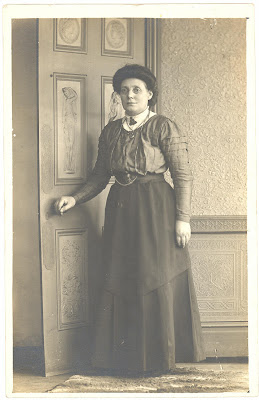 She was known as Nana to the family, my great-grandmother was born in Manchester, England. I have her registration of birth where she is named Sarah Esther Letitia Brown, daughter of John Brown and Hannah Brown formerly Duckworth. The name Sarah only appeared on her birth and death certificates, she was always known as Esther Letitia on all other documents including her marriage to John Davies at age seventeen on 16 February 1879. John was an illiterate widower who had fathered fourteen children with his first wife. John was forty-three when he married Esther and three living children were older than his new bride.
Why did Nana marry a man old enough to be her father?
Why am I drawn to Nana as my favourite ancestor? Esther Letitia Brown is the only great-grandparent who was still alive when I was born and I do have some memories of her. I was only seven years old when she passed away on 5 November 1952. I remember being told to be quiet when we visited my grandparents' house on Oak Bay Avenue in Victoria because we couldn't disturb Nana, who lived with Granny and Grandpa.
Another reason I chose Nana as my favourite ancestor is because she was brave enough to move on and venture forth from England to Toronto to Edmonton and finally to Victoria.
I have many facts and stories about Esther but there are many questions still to be answered, including her trip back to England from November 1910 to June 1911 with her daughter-in-law and grandchildren. Why? During that time the rest of the family moved from Toronto to Edmonton. At some time Nana had a double mastectomy, was this done while she was back in England and was she an early cancer survivor? She has been referred to as a nurse and a midwife, did she have any training or was it just life experiences that prepared her for those roles?
I hope to answer some of the un-answered questions about my great-grandmother before too long and finish writing her story.

Why did Nana marry a man old enough to be her father?
Why am I drawn to Nana as my favourite ancestor? Esther Letitia Brown is the only great-grandparent who was still alive when I was born and I do have some memories of her. I was only seven years old when she passed away on 5 November 1952. I remember being told to be quiet when we visited my grandparents' house on Oak Bay Avenue in Victoria because we couldn't disturb Nana, who lived with Granny and Grandpa.
Another reason I chose Nana as my favourite ancestor is because she was brave enough to move on and venture forth from England to Toronto to Edmonton and finally to Victoria.
I have many facts and stories about Esther but there are many questions still to be answered, including her trip back to England from November 1910 to June 1911 with her daughter-in-law and grandchildren. Why? During that time the rest of the family moved from Toronto to Edmonton. At some time Nana had a double mastectomy, was this done while she was back in England and was she an early cancer survivor? She has been referred to as a nurse and a midwife, did she have any training or was it just life experiences that prepared her for those roles?
I hope to answer some of the un-answered questions about my great-grandmother before too long and finish writing her story.
Tuesday, March 1, 2011
March is Women's History Month
Lisa Alzo has suggested daily blogs to celebrate Women's History Month. http://www.theaccidentalgenealogist.com/2011/02/back-by-popular-demand-fearless-females.html I hope to participate in as many of the thirty-one suggestions as I have time for. Back in the 1800s and before, the women in the family are hard to track because they lost their identity once they married. So often I have found listings for Mrs. "first and surname of husband" I am looking forward to this project.
Thursday, February 17, 2011
Freemasons and the Davies Connection

While researching the shoemakers in the family for a previous post, I discovered the following cemetery transcription for Wilfrid and William's great-great-grandfather, William Duckworth:

There is mention of William Duckworth in a book on the history of the Masonic Lodge of Probity No 61, written in 1888. Copies of the pages follow:


Wednesday, February 16, 2011
My Dad was from a long line of Cobblers

The picture on the left is my Dad, Herbert William Davies, in his shop on Johnson Street in Victoria.
William Duckworth, Dad's third great-grandfather, was born about 1767 in Halifax, Yorkshire. William's occupation was described as a shoemaker at the trial of his son, George Duckworth, in 1812. George, another, shoemaker, was tried and sentenced to transportation for an incident related to the Luddite movement in Yorkshire. William was listed as a cordwainer in the 1841 and 1851 census.

Dad's father, my grandfather, lost a leg in the first world war and was unable to take up his former occupation of electrician after the war, and after a failed attempt at farming, Grandpa learned the trade of shoe repairing from an army friend. William Duckworth Davies, born 1891 in Runcorn, Cheshire to John Davies and Hannah Duckworth, owned his own shoe repair shops in Edmonton and Victoria. Grandpa is pictured on the right in his shop in Edmonton, Alberta. My Dad, Bert Davies, left school after grade eight to join his father in the business and is pictured in the archway.
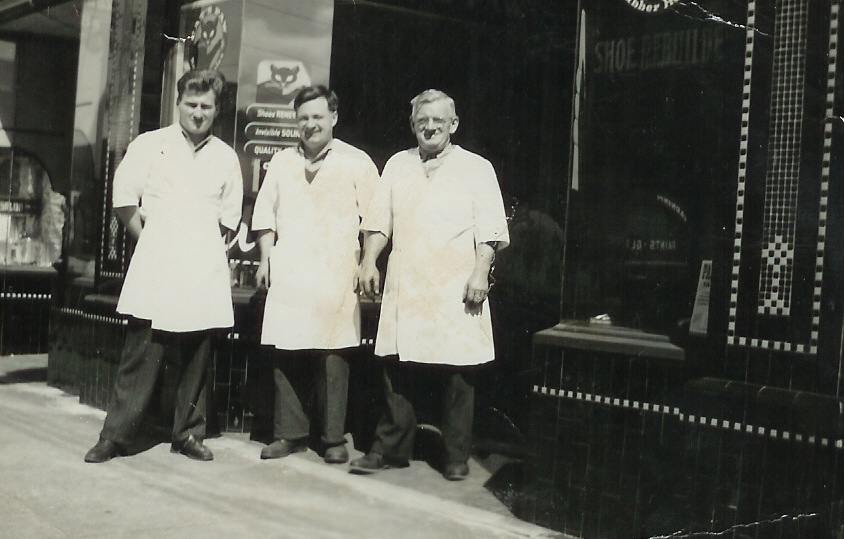

I remember the Yates Street store because I used to spend time there on Saturdays before and after my piano lessons. I love the smell of the adhesives and dyes when I enter a shoe shop today because it reminds me of my youth. Dad became an expert at dying shoes to match any colour and he also covered shoes with fabric. My bridesmaids wore shoes to match their dresses at my wedding. He also took a course through Dr. Scholls to learn the anatomy of a foot and he was able to fit arch supports, bunion pads, and other foot-care products.
Dad moved to a one-man shop on Johnson Street about 1970 and moved again to Cook Street in the Fairfield district of Victoria in the mid 1970s. These small shops were more profitable because he did not have the payroll expenses.
I had the advantage, or disadvantage of having a shoe expert for a father. Dad always had a say on which shoes I could wear. They always fitted properly and they had to have leather uppers and insoles. My shoes were always well soled and well heeled and there is no truth to the saying that "a cobbler's daughter goes barefoot".
Friday, October 1, 2010
More Puzzle Pieces
Last March I posted a blog titled "The Puzzle of Genealogy" which related to questions and answers brought on by the Bellamy Letters.
This week I went back into my email messages regarding the Rason family from ten years ago and found messages clipped together with a note: Jackson - Rason - Smith puzzle.
The subject of the puzzle ten years ago was a diary kept by Samuel Jackson (1867-1920). In the diary was a list of birthdays but no year of birth. Samuel's mother was Harriet Hand Smith, who was sister to my g.g.grandmother, Mary Creak Smith. Harriet and Mary had a younger sister, Eliza, who married Josiah Triffitt. Aunt Eliza was mentioned in Bellamy Letters #5.
Samuel Jackson's grandson, Norm Ashton, posted his grandfather's diary to the internet in 1998 wondering where the Rason name fit into the Jackson family. Through collaboration between Norm, Deborah Glover, and myself, we were able to identify most of the Rason entries but there was reference to some cousins in Holbeach, Lincolnshire:
- 12 May - G E J cousin Gertie Holbeach
- 1 Jun - M E J cousin Mary Edith Holbeach
- 2 Jul - A M J cousin Maud
- 16 Jul - J C J cousin Holbeach
- 22 Dec - Aunt E J
- Gertrude Ellen Triffitt (1887-1947)
- Mary Edith Triffitt (1882-)
- Alice Maud Triffitt (2 Jul 1880-1974) d.o.b confirmed on death registration
- John Carrington Triffitt (1875-)
- Eliza Smith Triffitt (22 Dec 1840-21 May 1921)
Subscribe to:
Comments (Atom)